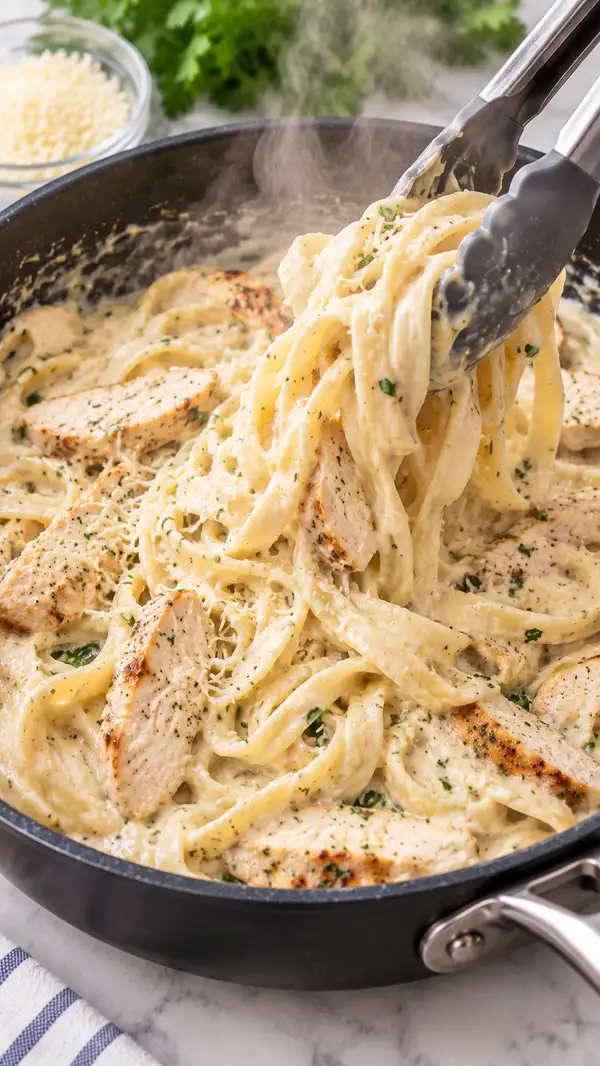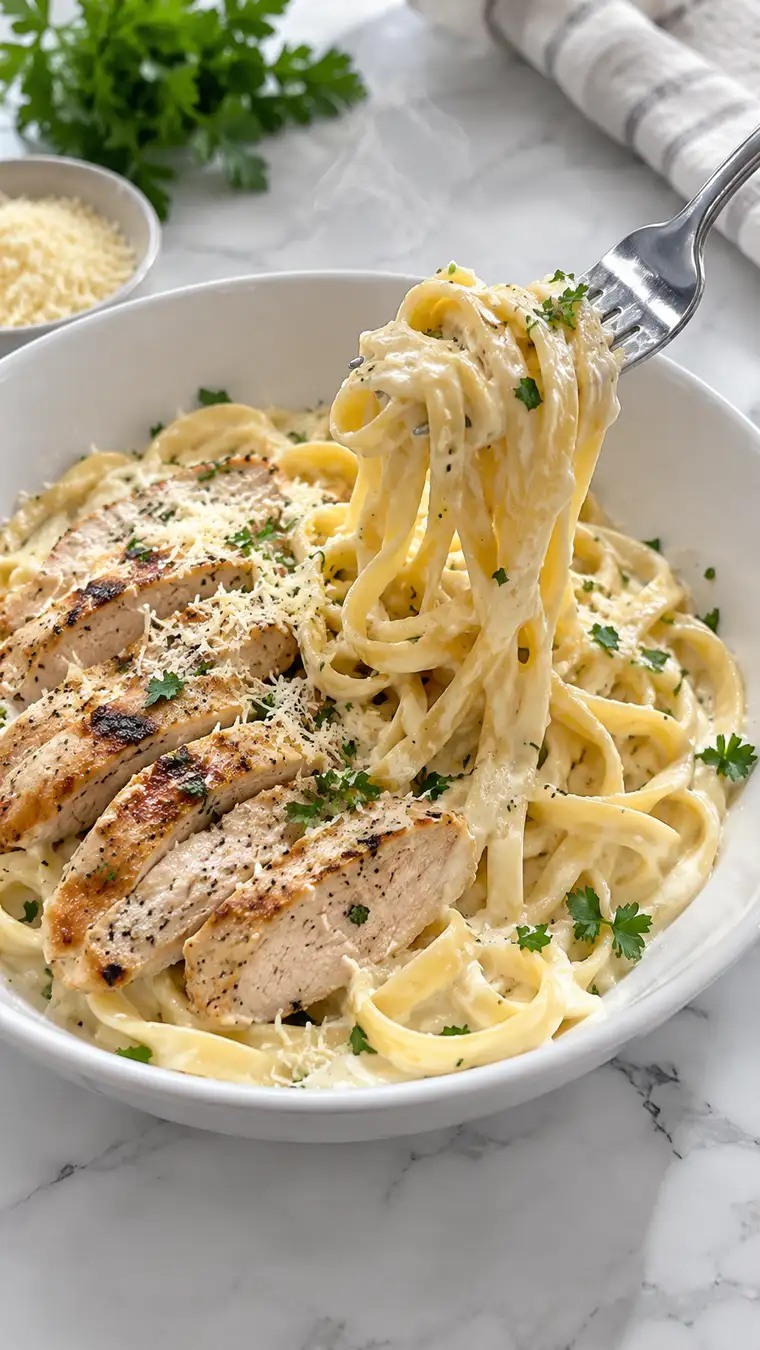
Craving creamy pasta without the heavy cream? This high-protein chicken alfredo uses a silky blended cottage cheese sauce, so you get a big, cozy bowl with about 57g of protein and 490 calories.
Why this alfredo works
Classic alfredo gets its richness from heavy cream and butter. Half a cup of heavy cream alone is about 400 calories, and two tablespoons of butter add roughly 200 more (USDA FoodData Central). That is before the pasta.
This version builds the same creamy, cheesy sauce from blended cottage cheese. Once it is blended for a full minute, the curds disappear and you get a thick, silky base with a mild tang that parmesan turns into "alfredo". Half a cup of 2% cottage cheese has around 85 calories and about 12g of protein, so the sauce adds protein instead of only fat.
Put that together with protein pasta and lean chicken and you get a big, filling bowl at about 490 calories and 57g protein.
Ingredient notes and swaps
- Protein pasta: chickpea, lentil and high-protein wheat pastas all work. Protein per serving varies a lot by brand (roughly 10–20g per 2 oz), so check the label if you track macros. Regular fettuccine works too; the bowl will have about 5–8g less protein.
- Cottage cheese: 2% gives the best balance of creaminess and calories. 4% is richer; fat-free works but the sauce is slightly thinner. Small-curd blends fastest.
- Parmesan: use finely grated parmesan from a block if you can. Pre-shredded cheese is coated to stop clumping and does not melt as smoothly.
- Chicken: rotisserie or leftover chicken saves 12 minutes. Shrimp is a great swap (cook 2 minutes per side).
- Dairy-free? This recipe relies on cottage cheese and parmesan, so it is not a good candidate. Try our Shrimp Spring Rolls instead.
Step-by-step
The full printable recipe card is below. Here is what each stage should look like.
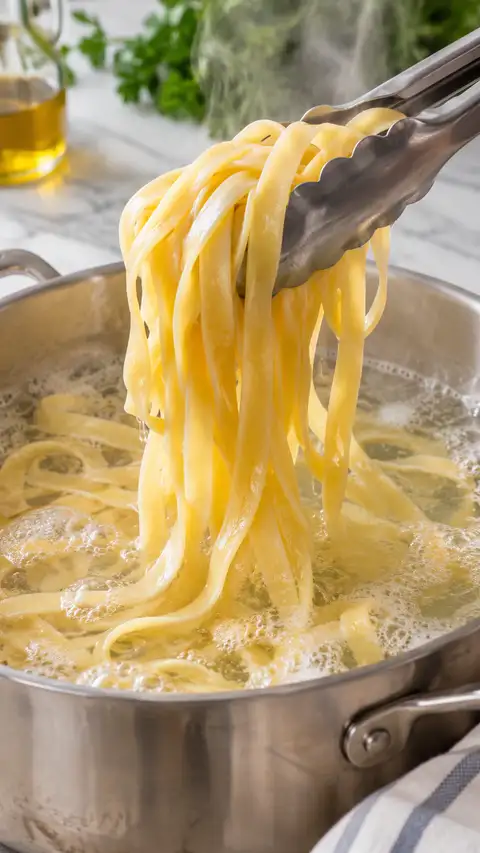
1. Cook the pasta
Salt the water well; it is the only seasoning the pasta gets. Before draining, scoop out half a cup of the cooking water. The starch in it is what makes the sauce cling to the noodles.
2. Sear the chicken
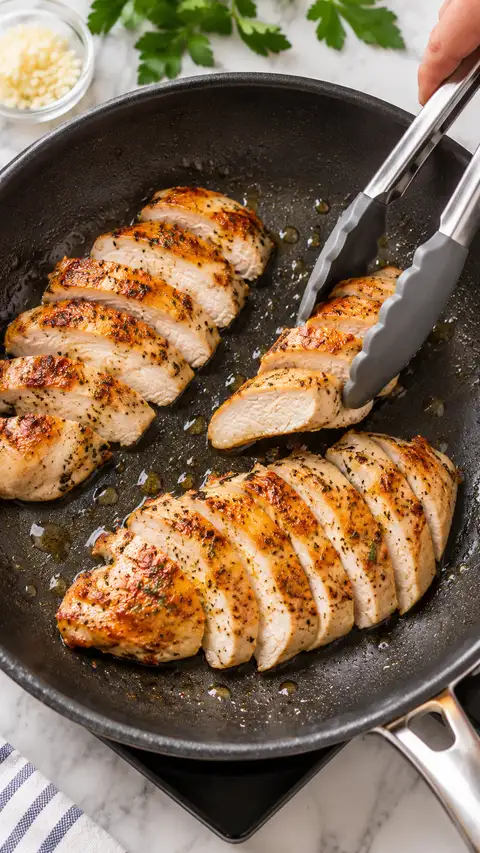
Pat the chicken dry so it browns instead of steaming. Let it rest for a few minutes before slicing so the juices stay inside.
3. Blend the sauce
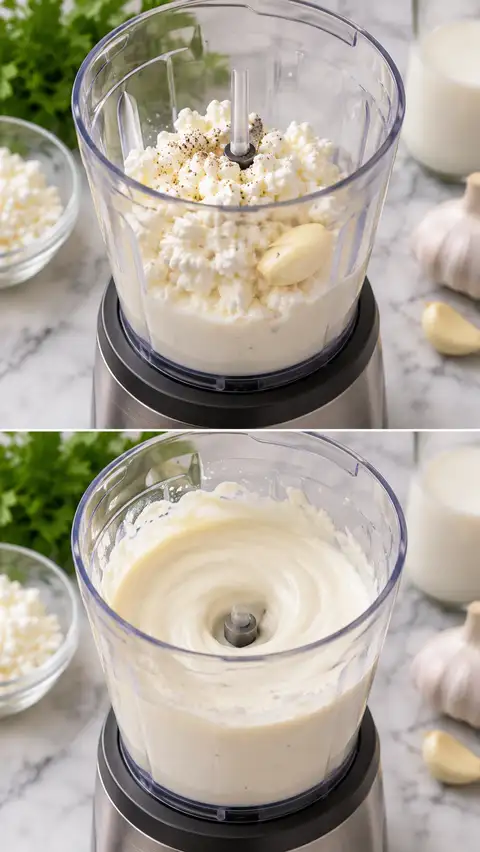
Blend longer than you think: 45–60 seconds. The sauce should look like thick, smooth cream with no visible curds. A small blender or a stick blender in a jar works best for a single serving.
4. Warm it gently
This is the step that makes or breaks it. Cottage cheese sauces split if they boil. Keep the heat low, stir constantly and take it off the heat as soon as it is hot. Thin it with pasta water a tablespoon at a time.
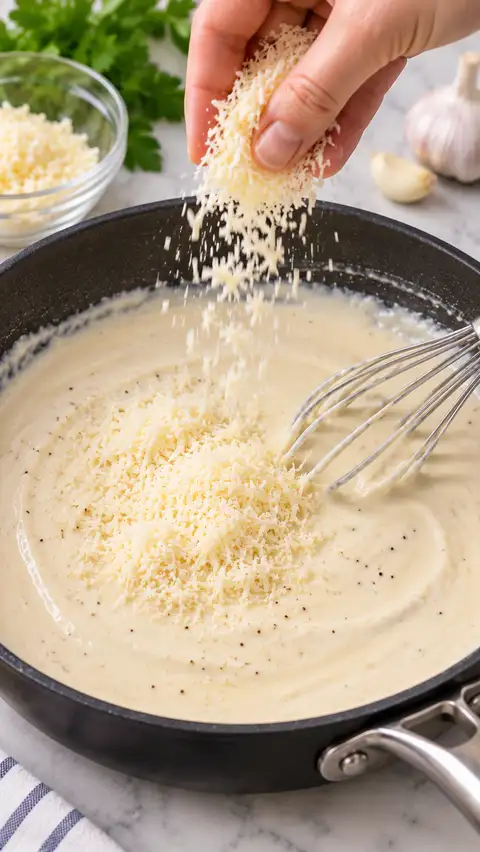
5. Toss and serve
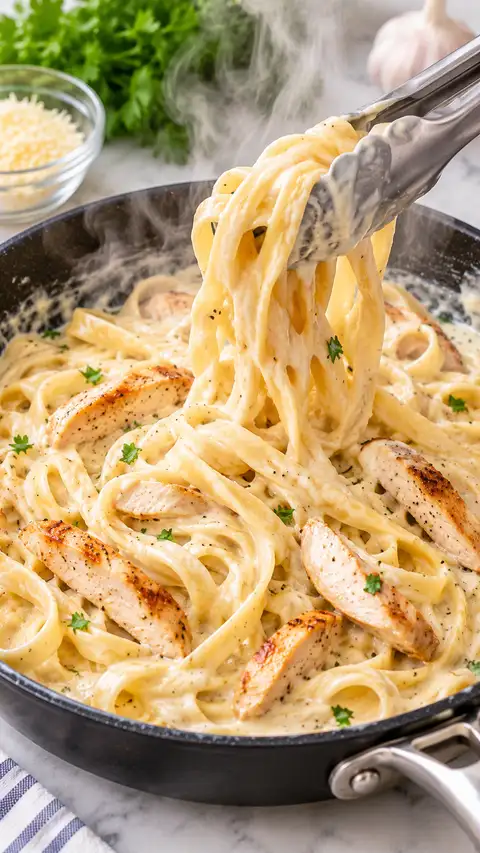
Add the pasta and chicken and toss for 30 seconds until every strand is coated and glossy. Serve right away with black pepper and parsley.
Common mistakes (and fixes)
- Grainy sauce: it was not blended long enough, or it boiled. Blend again with a splash of milk and reheat gently.
- Sauce too thick: add pasta water, a tablespoon at a time.
- Bland: cottage cheese needs salt and pepper. A little extra parmesan or a squeeze of lemon also wakes it up.
- Dry chicken: pull it at 74°C / 165°F and rest it before slicing.
Variations
- Garlic-lover's: roast 3 cloves in foil and blend them into the sauce.
- Spicy: add ¼ tsp red pepper flakes or a spoon of chili crisp.
- Veggie-loaded: toss in steamed broccoli or spinach for volume with very few extra calories.
- Lower-carb: swap half the pasta for zucchini noodles (about 70 fewer calories).
Meal prep and storage
Keep in an airtight container in the fridge for up to 3 days. The sauce thickens as it cools, so add a splash of milk or water before reheating. Microwave at 50% power, stirring every 45 seconds, to stop the sauce from splitting. Freezing is not recommended because cottage cheese sauces turn grainy after thawing.
What to serve with it
A crisp green salad with lemon, roasted broccoli or asparagus all balance the creamy pasta. If you want a light dessert that keeps protein high, try our Protein Cookie Dough.