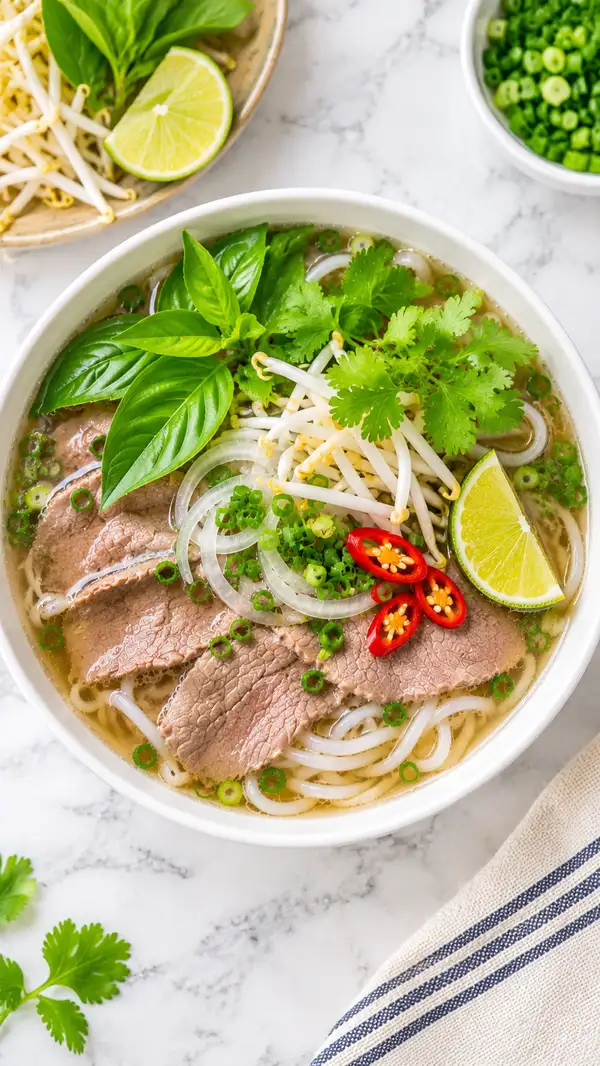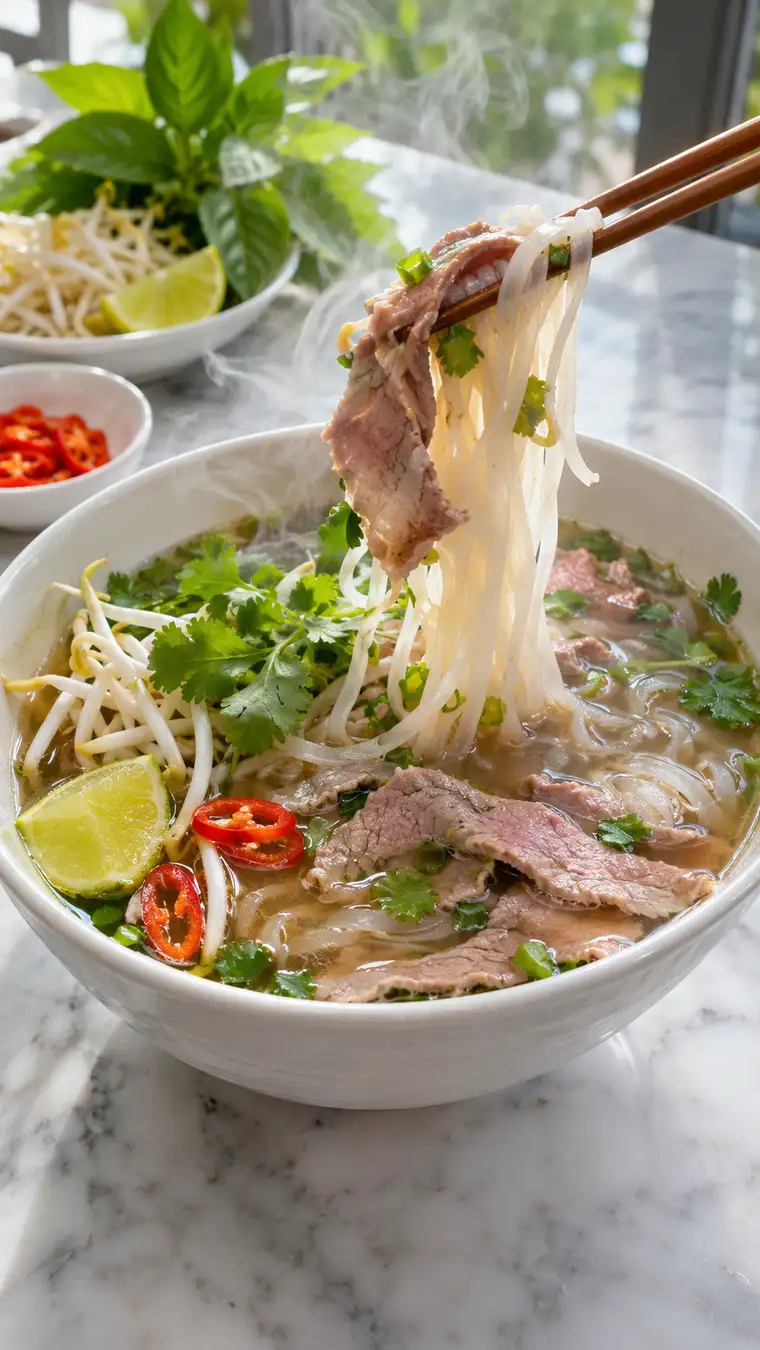
A shortcut Vietnamese beef pho ready in about 20 minutes: a fragrant star anise and cinnamon broth poured over rice noodles and paper-thin beef that cooks right in the bowl. About 38g of protein and 380 calories.
Why this pho works
Traditional pho broth simmers beef bones with charred onion, ginger and spices for many hours. That is the gold standard, and it is worth making on a slow weekend. This weeknight version gets you a lot of the way there by simmering store-bought beef broth with whole star anise, cinnamon and ginger for just 10 minutes.
The protein comes from lean eye of round, sliced so thin that the boiling broth cooks it in the bowl, which is exactly how many pho shops serve rare beef (tái). With a moderate portion of noodles and a big pile of fresh herbs, the bowl comes to about 380 calories and 38g protein.
Ingredient notes and swaps
- Beef: eye of round or sirloin, trimmed of fat. Flank works too. Ask the butcher to slice it thin, or freeze it for 20 minutes and slice it yourself.
- Broth: low-sodium beef broth lets you control the salt. Add fish sauce to taste at the end.
- Spices: star anise and cinnamon are the signature smell of pho. Add 2–3 cloves and a few coriander seeds if you have them.
- Noodles: flat rice noodles (bánh phở). Check the package; some only need soaking.
- Herbs: Thai basil, cilantro, bean sprouts, lime and chili are what make it taste fresh. Do not skip them.
A quick word on food safety
The broth needs to be at a rolling boil when you pour it, and the beef needs to be sliced very thin so it cooks through. If you prefer beef well done, or are serving someone who should avoid undercooked meat, dip the slices in the simmering broth for 30–60 seconds before adding them to the bowl.
Step-by-step
The full printable recipe card is below. Here is what each stage should look like.
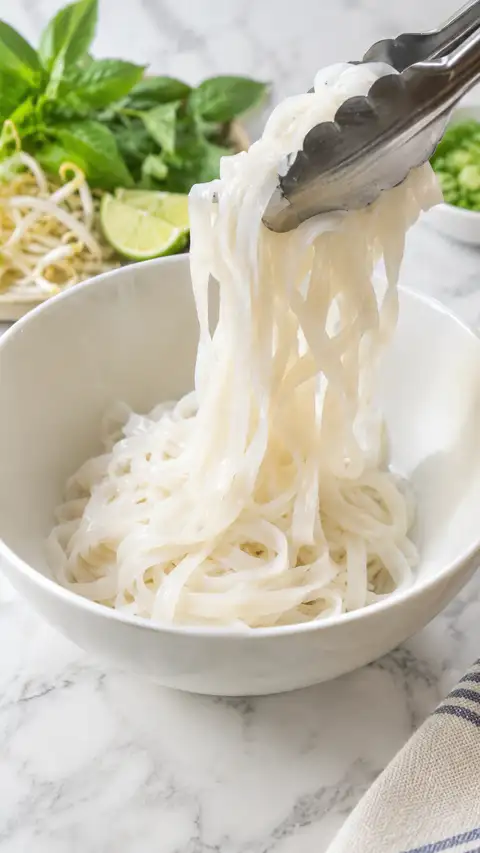
1. Noodles in the bowl
While the broth simmers with the spices, cook or soak the noodles, rinse them briefly and place them in a large, deep bowl. Warming the bowl with hot water first keeps the soup hotter for longer.
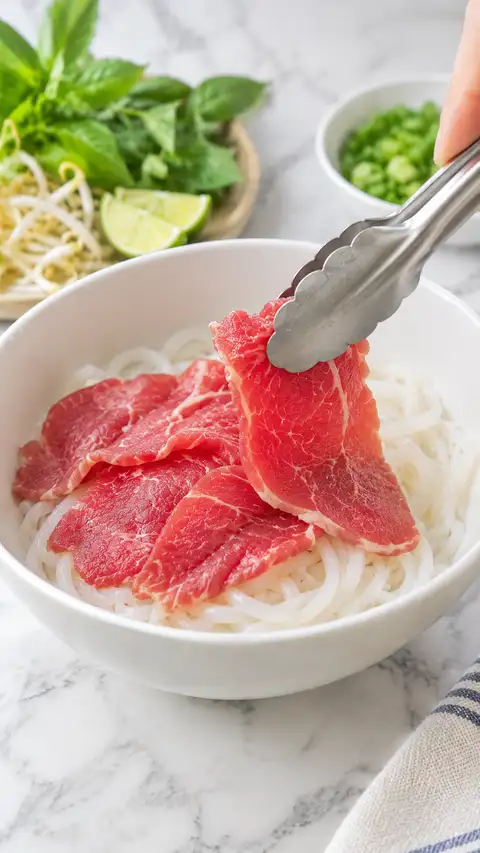
2. Lay the raw beef on top
Spread the paper-thin beef slices in a single layer over the noodles so the broth can reach every piece.
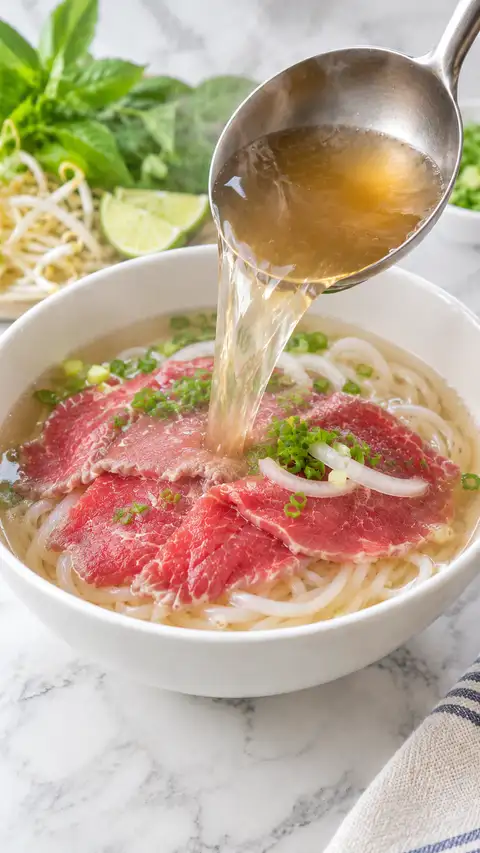
3. Pour the boiling broth
Strain out the spices, bring the broth back to a hard boil, then ladle it directly over the beef. You will see it change from red to pink to brown within seconds.
4. Add the herbs
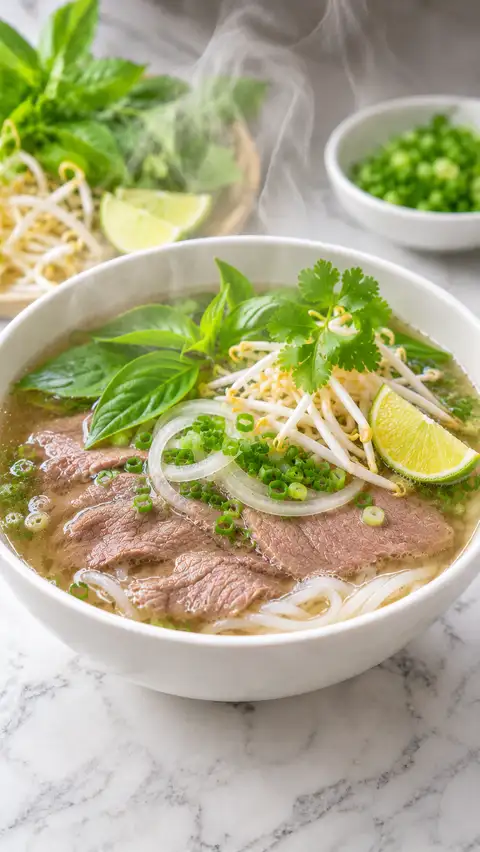
Pile on Thai basil, cilantro, bean sprouts, sliced onion and a lime wedge. Tear the basil leaves to release their aroma.
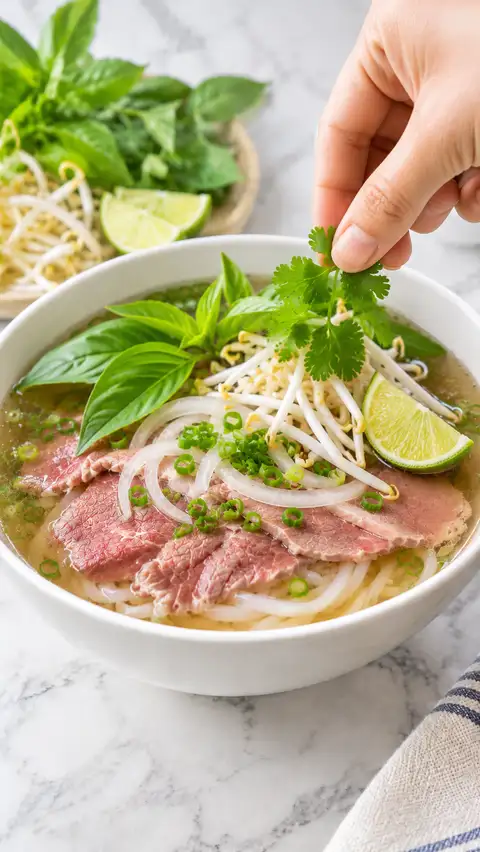
5. Season at the table
Squeeze in the lime and add chili, a few drops of fish sauce, hoisin or sriracha to taste. Eat it while it is steaming.
Common mistakes (and fixes)
- Tough beef: slices were too thick. Freeze the beef first and slice across the grain.
- Grey, overcooked beef: lay it on top, not under the noodles, and pour the broth over it at the end.
- Flat broth: toast the spices in a dry pot for a minute before adding the broth, and season with fish sauce and a pinch of sugar.
- Mushy noodles: undercook them slightly; the hot broth finishes them.
Variations
- Chicken pho (phở gà): chicken broth with shredded chicken breast and the same spices.
- Extra protein: add a few beef meatballs or a soft-boiled egg.
- Lower-carb: use half the noodles and add zucchini noodles or extra sprouts.
Storage
Store the broth, noodles and herbs separately. The spiced broth keeps 4 days in the fridge or 3 months in the freezer, so it is worth making a big pot. Always slice fresh beef and re-boil the broth for each bowl.